
Four Perspectives: How TribalHub’s CTTP Program Transforms Technology Careers
Written by Olivia Fellows, TribalHub Industry Engagement & Narrative Producer in General Articles
Date: 09/15/2026
Across Native American gaming enterprises, public safety facilities, and tribal government operations, traditional IT education prepares leaders with technical skills in technical environments but often overlooks tribal sovereignty, effective communication, and interdepartmental dependencies.
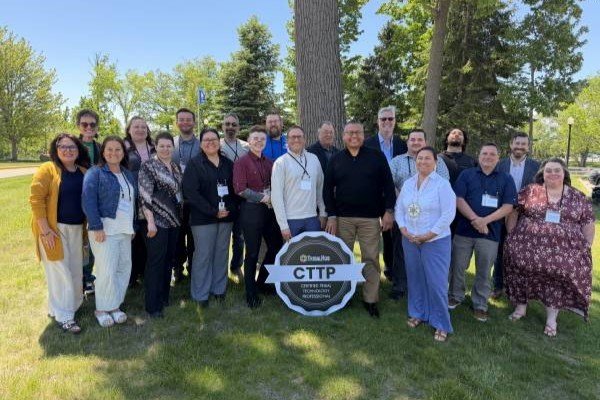
To tackle those gaps, TribalHub established the Certified Tribal Technology Professional (CTTP) program: an intensive week-long cohort designed to integrate technical education with tribal culture, strategic leadership, and proven operational frameworks.
Connecting Corporate Education & Centering Sovereignty
Valerie Kress, an Information Technology (IT) project manager at Thunder Valley Casino Resort, began her career as a security officer.
She joined the technology team as a trainee with no formal technical experience and initially faced challenges with basic hardware concepts, like the difference between HDMI and DisplayPort cables.
When Kress looked into formal higher education in technology, she realized standard programs failed to address the distinct needs of sovereign nations.
"When I go to school for IT, it's like corporate IT, so it's not technology-minded in a tribal sense," Kress said. "We don't ever talk about sovereignty or anything like that. My responsibility is to make sure that I'm being responsible with the tribe's sovereignty and the things that are irreplaceable to them."
Kress found the CTTP cohort after visiting the TribalHub tabletop display at TribalNet. During the week-long training, she engaged in hands-on leadership exercises, including a popsicle stick bridge-building activity designed to simulate project launches, scope creep, changing parameters, and sudden team reassignments under pressure.
The program also taught participants personality framework exercises that categorized working styles into distinct groups, such as dominant, day-to-day, outward charismatic, and technical analytical roles. This gave Kress a better understanding of role functions and best practices for interdepartmental communication.
After returning to work, Kress delivered a PowerPoint presentation to department managers and front-end help desk technicians. She used her training to bolster individual strengths, reassuring trainees that unique backgrounds bring essential perspective to problem-solving.
Kress also applied her coursework to vendor management, evaluating ten-plus-year vendor agreements through a seven-year timeline to ensure operational consistency.
"I need to make sure the casino is good because that funds those government things, and it funds the kids, the hospitals, and those programs," Kress said.
Effective Education On Communicating With Tribal Leaders
Taylor Bradley, who works in technology for the Emergency Operations Center (EOC) at the Three Affiliated Tribes, brought more than 20 years of experience to the cohort.
A Marine Corps veteran who served from 2008-12 as a diesel mechanic, Bradley entered the technology field using computer systems for diagnostic troubleshooting. His career path includes dispatch supervision, drug awareness program management, and public safety technology support.
Bradley said one of the most impactful elements of the training was its focus on leadership psychology and self-awareness.
"One thing they talked about was leadership, where it starts with self-awareness," Bradley said. "A phrase that we heard repeatedly was 'the ability to absorb anxiety is power.' In IT, we're often the ones who show up when systems fail, or problems arise. We got to go and do something, but we also got to remember to stay professional, think clearly, and remember that our audience doesn't understand our terms or our job as well as we do."
Bradley drew on his military background to simplify complex technical concepts for stakeholders, using straightforward communication so every participant understood operational realities. Using the program's twelve pillars framework, he established a clear roadmap for improving departmental documentation, cybersecurity standards, and strategic planning.
He used these new presentation skills to pitch infrastructure projects to the tribal council, securing funding and approvals to deploy NinjaOne endpoint management software and transition servers in-house to strengthen governance and data sovereignty.
"Don't think twice. Just do it," Bradley advised prospective participants, emphasizing that senior executives, department directors, and leadership can benefit from attending to understand the depth and necessity of technology investments.
Shifting from Technical Jargon to Long-Term Vision
In Southern California, Sam Babbitt serves as the Director of IT and Cybersecurity for the La Jolla Band of Luiseño Indians.
With over thirty years of experience spanning healthcare, corporate environments, and managed service providers, Babbitt operates as a single-person department servicing a sixteen-thousand-acre reservation. His responsibilities cover police, fire, education, housing, youth, environmental, forestry, natural resources, and GIS departments.
Although he was initially hesitant about the coursework and self-assessments before the cohort, Babbitt said his perspective changed immediately once he started.
"I kind of went into it a little skeptical, but after day one, it totally changed my mind," Babbitt said. "The goal wasn't really to learn new technology, but to understand how technology enables some of the most critical things: sovereignty, economic development, member services, and long-term nation building."
After the cohort, Babbitt scheduled meetings with council members and department directors to hear their personal visions as community members before discussing technology needs.
"I no longer go in and say all the technical mumbo jumbo," Babbitt said. "To go in and explain it differently, and say we need to do X because it's going to benefit your kids, your grandkids, and the next generation, that right there just changed my entire role."
Babbitt adjusted departmental goals around long-term community benefits rather than routine hardware replacement or compliance frameworks. Using language leadership could understand, he eventually secured budget approval to add a full-time position to his team.
"Our job isn't simply to manage technology," Babbitt added. "Our job is to help build resilient, self-sufficient tribal nations that can thrive for generations."
A Lesson On Decentralized Governance & Its Risks
Brent Nelson, Information Security Officer (ISO) for the Navajo Nation Department of Information Technology, brought more than 25 years of service to the CTTP program.
Overseeing cybersecurity, policy development, risk mitigation, and procurement governance, Nelson was seeking strategies to manage broad responsibilities within a sovereign government structure.
Nelson said the cohort taught him the value of connecting both organizational leadership and technical solutions.
"Technology leadership is primarily focused on people, governance, policy, and strategic organizational alignment rather than just technical tools," Nelson noted.
Operating within the decentralized structure of the Navajo Nation, Nelson applied his coursework in stakeholder management to translate technical vulnerabilities and system configurations into clear organizational risks that executive leaders could understand and approve necessary solutions for.
Rather than relying on top-down authority, he utilized relationship-building techniques to establish common cybersecurity standards across independent legislative, judicial, and executive branches.
According to Nelson, access to post-cohort coaching, resources, and a direct line to peers across Indian Country helped him bridge the communication divide in government leadership while navigating complex administrative challenges.
"The ability to stay in contact with peers via phone or email provides valuable long-term resources for solving complex issues," Nelson said, recommending the cohort to technology managers across gaming, healthcare, and enterprise sectors.
Growing As A Tribal Technological Resource
Beyond practical workplace applications, alumni said they valued the connections gained through the cohort, which broke down the isolation many technology professionals describe in hyper-specialized technology industries.
"For so long I thought I was just in my own little room dealing with all these issues, and it's actually a million people in all these little rooms dealing with these issues," Kress said. "If people have the opportunity to go, I think they should absolutely go."
The upcoming week-long, in-person intensive 2026 Certified Tribal Technology Professional Program is set for Nov. 16–20, 2026, at the Sycuan Casino Resort in El Cajon, California.
Attendees can secure a discounted room rate of $109++/night through Nov. 2, 2026, by calling the resort and mentioning the TribalHub CTTP program block.
For more information and to register for the November cohort, visit https://tribalhub.com/events/certified-tribal-technology-professional-programs/2026-11-cttp-class/.